5 Essential Client Obstacle Strategies can transform everything.
As wellness coaches, we’ve all been there: a motivated client suddenly hits a wall, progress stalls, and what seemed like a straightforward coaching relationship becomes complex. The reality is that client obstacles are not roadblocks to success—they’re opportunities for breakthrough moments when approached with the right coaching strategies.
After working with hundreds of wellness professionals, we’ve identified the most effective methods for transforming common client obstacle coaching challenges into powerful catalysts for lasting change. Our structured Client Obstacle Coaching Tool has helped coaches worldwide navigate these situations with confidence and precision.
Understanding the Nature of Client Obstacles in Wellness Coaching
Before diving into solutions, it’s crucial to recognize that obstacles in wellness coaching rarely exist in isolation. They’re interconnected webs of behavioral, emotional, and environmental factors that require systematic evaluation. The most successful coaching strategies acknowledge this complexity while providing clear pathways forward.
Client obstacles typically manifest in five distinct categories that often overlap and influence one another. Time and scheduling conflicts represent one of the most common challenges, where clients struggle to fit wellness activities into increasingly demanding lifestyles. Motivation and accountability issues emerge when initial enthusiasm wanes and clients lose sight of their goals. Knowledge gaps and skill deficits become apparent when clients want to make changes but lack the practical understanding of how to implement them effectively. Environmental and social barriers create external pressures that undermine progress, while deep-seated limiting beliefs and mindset blocks create internal resistance to lasting change.
5 Essential Client Obstacle Strategies – Resolution
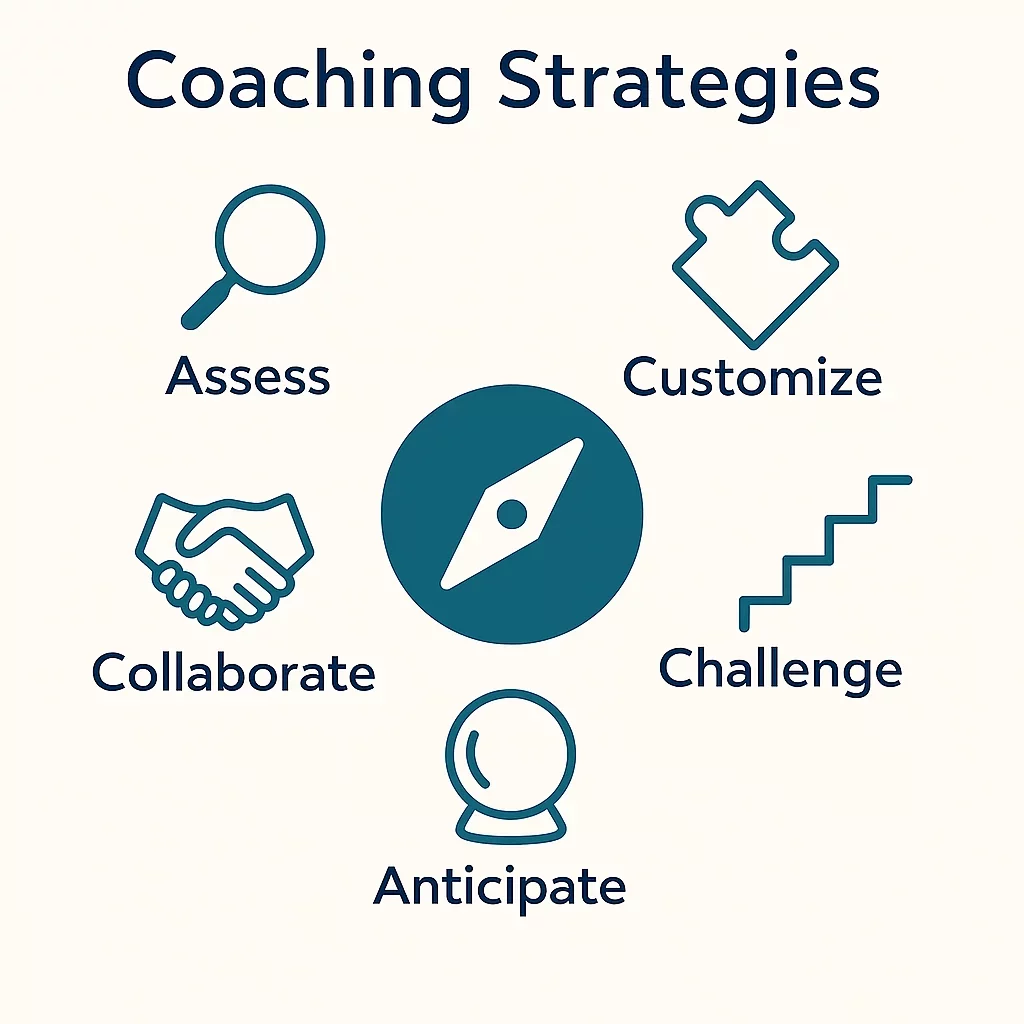
1. Implement Structured Obstacle Assessment
The foundation of effective client obstacle coaching lies in thorough, systematic evaluation. Rather than making assumptions about what’s holding clients back, successful coaches use structured questioning techniques to uncover the root causes. This approach requires patience and skill, as clients often present surface-level concerns that mask deeper underlying issues.
Our assessment framework begins with surface-level obstacle identification, where we explore what the client immediately recognizes as their primary challenge. This initial exploration often reveals only the tip of the iceberg. The next layer involves underlying pattern analysis, examining recurring themes that emerge across different areas of the client’s life. We then conduct a comprehensive resource and strength inventory, identifying existing tools and capabilities the client already possesses but may not be leveraging effectively. Finally, environmental factor mapping helps us understand the external influences that either support or hinder the client’s progress.
2. Create Tailored Solution Pathways
Once obstacles are clearly identified, the next critical step involves developing customized coaching strategies that address each client’s unique situation. Generic advice rarely creates lasting change because it fails to account for individual differences in personality, lifestyle, resources, and circumstances. Personalized approaches, on the other hand, meet clients where they are and provide realistic pathways forward.
Effective solution pathways must carefully consider the client’s preferred learning style and communication preferences, as some clients respond better to visual tools while others prefer detailed verbal explanations. Available time and energy resources play a crucial role in determining the pace and intensity of interventions. Existing support systems can be leveraged to reinforce progress, while gaps in support can be addressed proactively. Understanding past successful strategies the client has used in other areas of life provides valuable insights into their natural problem-solving tendencies. Additionally, anticipating potential implementation barriers allows coaches to build contingency plans that prevent minor setbacks from becoming major derailments.
3. Build Progressive Challenge Hierarchies
Client obstacles often feel overwhelming because they’re viewed as monolithic problems that must be solved all at once. This all-or-nothing thinking frequently leads to paralysis and abandonment of goals. Breaking complex challenges down into manageable, sequential steps transforms intimidating obstacles into achievable actions that build momentum over time.
This hierarchical approach begins by identifying micro-steps that create immediate forward movement without overwhelming the client’s current capacity. These small actions serve as confidence builders and momentum generators. Creating clear success milestones throughout the process helps maintain motivation during longer-term change initiatives. Establishing regular feedback loops ensures that strategies remain aligned with the client’s evolving needs and circumstances. Building confidence through early wins creates a positive cycle where success breeds more success, making larger challenges feel more manageable.
4. Develop Obstacle Anticipation Skills
Proactive client obstacle coaching means helping clients anticipate and prepare for potential roadblocks before they occur. This preventive approach significantly increases long-term success rates by building resilience and adaptive capacity. Rather than waiting for problems to arise, skilled coaches help clients develop the foresight and planning skills to navigate challenges more effectively.
Scenario planning for common setbacks involves exploring likely obstacles and developing specific strategies for each situation. Creating detailed “if-then” contingency strategies gives clients concrete action plans when faced with predictable challenges. Developing greater self-awareness around personal patterns helps clients recognize early warning signs and intervene before small issues become major problems. Building resilience and adaptive capacity ensures that clients can bounce back from setbacks and continue moving toward their goals despite temporary obstacles.
5. Foster Collaborative Problem-Solving
The most powerful coaching strategies position clients as active partners in obstacle resolution rather than passive recipients of advice. This collaborative approach builds ownership, confidence, and sustainable problem-solving skills that extend far beyond the coaching relationship. When clients participate actively in identifying and solving their own challenges, they develop the internal resources needed for long-term success.
Collaborative problem-solving involves regular joint brainstorming sessions where coach and client work together to generate creative solutions. Client-led solution testing encourages clients to take ownership of their progress by experimenting with different approaches and evaluating results. Regular strategy refinement based on real-world results ensures that interventions remain practical and effective. Celebrating problem-solving breakthroughs reinforces the client’s growing confidence and capability.
Sample Mini-Assessment: Evaluate Your Client’s Obstacle Profile
Use this condensed version of our Client Obstacle Coaching Tool to quickly assess where your clients might need additional support. This assessment provides a structured framework for understanding obstacle patterns and priority areas for intervention.
Part 1: Obstacle Identification involves having your client rate each area from 1-5, where 5 indicates a significant challenge. Time management and scheduling challenges often score highly for busy professionals and parents. Motivation and consistency issues frequently emerge after the initial excitement of starting a new program wears off. Knowledge and skill gaps become apparent when clients understand what they should do but lack the practical know-how to implement changes effectively. Social and environmental support deficits can undermine even the most motivated individuals. Mindset and belief patterns often represent the deepest and most persistent obstacles to change.
Part 2: Resource Assessment asks clients to identify their top three assets in each category. Personal strengths they can leverage might include discipline in other areas of life, strong social connections, or previous success with similar challenges. External resources available to them could include supportive family members, workplace wellness programs, or community resources. Past successes they can build upon provide valuable insights into their natural change processes and effective strategies.
Part 3: Priority Setting has clients rank their top three obstacles to address first. This ranking reveals not only which challenges feel most pressing but also indicates the client’s readiness and motivation levels for different types of change.
The interpretation guide helps coaches understand the results effectively. Scores of 4-5 in any area indicate primary focus zones that require immediate attention and targeted interventions. Low resource identification suggests the need for strength-building work before tackling major obstacles. Priority rankings reveal client readiness and motivation levels, helping coaches sequence interventions appropriately.
Implementing Your Client Obstacle Coaching System
Successful implementation of these coaching strategies requires consistent application and continuous refinement. The most effective approach involves systematically integrating obstacle-focused thinking into every aspect of your coaching practice, from initial consultations through long-term follow-up.
Integrating assessment into your intake process makes obstacle evaluation a standard part of new client onboarding rather than an afterthought when problems arise. Creating template resources allows you to develop reusable frameworks that can be customized for individual clients while maintaining consistency in your approach. Tracking pattern recognition helps you notice common obstacles across your client base, enabling you to refine your approaches and develop specialized expertise in particular challenge areas.
Building comprehensive solution libraries involves compiling successful strategies that can be adapted for similar situations, creating a valuable resource that grows more powerful over time. Establishing robust feedback mechanisms ensures regular evaluation of your client obstacle coaching interventions, allowing for continuous improvement and adaptation based on real-world results.
Measuring Success in Obstacle-Focused Coaching
The true measure of effective client obstacle coaching isn’t the absence of challenges—it’s the development of robust systems for navigating them. Success in this approach looks different from traditional coaching metrics because it focuses on building capacity rather than simply achieving short-term goals.
Successful clients begin to proactively identify potential obstacles before they become major issues, demonstrating increased self-awareness and foresight. Problem-solving conversations become more collaborative and less dependent on coach guidance, indicating growing client confidence and capability. Setbacks are viewed as learning opportunities rather than failures, reflecting a healthier relationship with the change process. Clients develop transferable skills that apply across multiple life areas, creating broader life improvements beyond the original coaching focus. Long-term adherence to wellness programs significantly improves as clients become more skilled at navigating inevitable challenges.
Conclusion: Transforming Obstacles into Opportunities
Client obstacles will always be part of the wellness coaching landscape, but they don’t have to derail progress or frustrate coaches and clients alike. The difference between struggling coaches and thriving ones lies in their approach to these challenges. By implementing structured coaching strategies that view obstacles as opportunities for deeper growth and sustainable change, we transform our coaching practice from reactive problem-solving to proactive empowerment.
The Client Obstacle Coaching Tool methodology represents a fundamental shift in how we approach client challenges. Rather than seeing obstacles as problems to be eliminated, we recognize them as valuable sources of information about our clients’ needs, patterns, and growth opportunities. This perspective transforms every challenge into a chance to deepen the coaching relationship and build more robust, sustainable change processes.
Remember that every obstacle your client faces is an opportunity to deepen their self-awareness, build their capacity for change, and strengthen their commitment to long-term wellness success. With the right coaching strategies in place, what once seemed like roadblocks become stepping stones to breakthrough results. The investment in developing these skills pays dividends not only in client outcomes but also in your own satisfaction and effectiveness as a wellness professional.