Why Wellness Coach Specialization Is Becoming So Important
The wellness coaching profession has expanded significantly in recent years, creating new opportunities for individuals who want to help others improve their health, routines, stress management, and overall quality of life. As the industry grows, wellness coach specialization is becoming increasingly important for professionals who want to stand out and build meaningful careers.
Many aspiring coaches begin with a broad interest in wellness, but eventually realize that the field includes many different directions. Some coaches focus on workplace well-being, while others work in lifestyle transformation, recovery, sleep habits, accountability coaching, or stress reduction. Understanding wellness coach specialization can help professionals identify where they fit best and how they want to serve clients long term.
Specialization is important because it helps define your coaching identity. Instead of trying to appeal to everyone, specialized coaches often create clearer messaging, stronger programs, and more targeted client experiences. This can improve both client trust and professional confidence.
Understanding the Purpose of Wellness Coach Specialization
Wellness coach specialization refers to focusing your coaching practice on a particular area of wellness, client population, or coaching outcome. Rather than offering generalized support in every possible area, specialized coaches develop expertise within a more defined focus.
This approach often benefits both the coach and the client. Clients usually feel more comfortable working with someone who understands their specific challenges, while coaches are able to build deeper knowledge and more refined coaching systems over time.
For example, one coach may specialize in helping busy professionals reduce stress and improve routines, while another may focus on helping clients improve sleep habits and recovery behaviors. Both are wellness coaches, but their coaching experiences and client outcomes may look very different.
Corporate Wellness Coaching Continues to Expand
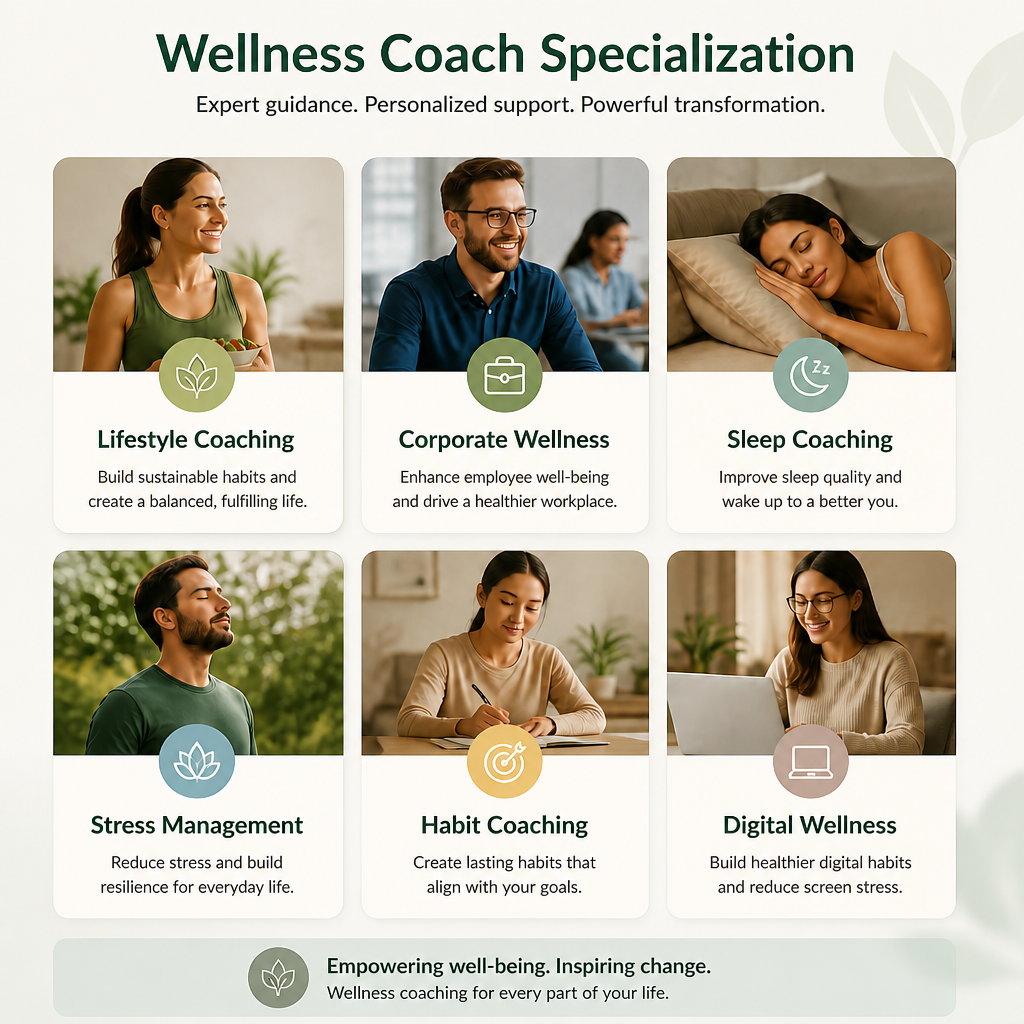
One of the most rapidly growing areas of wellness coach specialization is corporate wellness. Businesses are becoming increasingly aware that employee well-being affects productivity, engagement, retention, and workplace culture.
Corporate wellness coaches may work with organizations to provide workshops, stress management education, lifestyle coaching, accountability programs, or workplace wellness initiatives. Some coaches work independently with companies, while others become part of larger wellness teams or consulting groups.
This specialization is attractive for professionals who enjoy leadership, communication, and structured program development. It also creates opportunities for online coaching, group workshops, and long-term organizational partnerships.
Our Corporate Wellness Architect (CWA) course is perfect for covering all angles of corporate wellness and worksite health promotion. There is nothing else like it in the coaching industry.
Lifestyle Wellness Coaching Remains Highly Popular
Lifestyle coaching is another major area of wellness coach specialization because it addresses the practical side of daily living. Many individuals struggle with consistency, routines, stress management, exercise adherence, and maintaining healthy behaviors over time.
Lifestyle-focused coaches help clients create sustainable systems that support long-term change. Instead of relying on short-term motivation, they work with clients to develop realistic strategies that fit into everyday life.
This type of coaching is highly adaptable and can be delivered in person or online. It also allows coaches to work with a broad range of clients while still maintaining a clear coaching structure.
Sleep and Recovery Coaching Are Growing Quickly
Sleep coaching has emerged as an increasingly valuable wellness coach specialization as awareness grows regarding the connection between sleep, stress, recovery, and performance. Many individuals experience ongoing fatigue, inconsistent sleep routines, or stress-related sleep difficulties that affect multiple areas of their lives.
Sleep-focused wellness coaches often help clients improve routines, identify behavioral patterns, create healthier evening habits, and develop strategies that support more restorative sleep.
Because sleep affects physical health, emotional regulation, cognitive function, and productivity, this specialization continues to gain relevance within the broader wellness industry.
Stress Management Coaching Supports Modern Lifestyles
Modern lifestyles have created significant demand for stress management support. Many individuals are balancing work responsibilities, family obligations, technology overload, and ongoing mental fatigue. As a result, stress management has become an important area of wellness coach specialization.
Coaches working in this area may focus on behavior modification, resilience strategies, nervous system regulation, mindfulness practices, and lifestyle planning. Their goal is often to help clients create healthier routines while reducing overwhelm and improving overall well-being.
This specialization can also complement other coaching categories, including corporate wellness, lifestyle coaching, and recovery coaching.
Habit Coaching Focuses on Sustainable Change
Another growing form of wellness coach specialization involves helping clients improve consistency and long-term behavior adherence. Habit-focused coaches work with individuals who struggle to maintain healthy routines despite understanding what they should be doing.
These coaches help clients identify obstacles, establish realistic goals, and create systems that support daily implementation. Rather than emphasizing perfection, habit coaching focuses on repeatable behaviors and gradual progress.
Because behavior change is central to many wellness goals, this specialization can integrate naturally with multiple areas of coaching.
Digital Wellness Coaching Creates Flexible Opportunities
Technology has changed how coaching services are delivered, making digital wellness one of the most flexible forms of wellness coach specialization. Coaches can now work with clients remotely through video calls, mobile platforms, digital accountability systems, and online coaching programs.
This approach allows coaches to build flexible business models while expanding their reach beyond local geographic areas. Digital coaching may include one-on-one sessions, memberships, educational content, workshops, or group coaching programs.
As online wellness services continue to evolve, coaches who understand digital communication and online program delivery may discover significant opportunities for professional growth.
Choosing the Right Wellness Coach Specialization
Selecting the right wellness coach specialization depends on personal interests, professional strengths, and long-term career goals. Some individuals enjoy structured workplace environments and may prefer corporate wellness, while others are more interested in individualized lifestyle coaching or recovery-focused support.
It is also helpful to consider how you want to work. Some coaches prefer the flexibility of online coaching, while others enjoy speaking, group facilitation, or organizational wellness initiatives.
The best specialization is usually one that aligns naturally with your communication style, interests, and desired coaching experience while still allowing room for continued learning and growth.
Training and Skill Development Matter
Building a successful specialization requires more than enthusiasm alone. Strong training programs help coaches develop communication skills, behavior change strategies, accountability systems, and practical coaching experience.
Different educational formats support different learning preferences. Live workshops may provide accelerated learning opportunities, while cohort-based programs encourage collaboration and guided practice. Online courses offer flexibility, and advanced training can help coaches deepen expertise within specific coaching areas.
Coaches who continue refining their skills often feel more confident working with clients and adapting to changing industry trends.
Final Thoughts on Wellness Coach Specialization
Wellness coach specialization is becoming increasingly valuable as the coaching industry continues to expand. Clients are often looking for professionals who understand their specific challenges and can provide targeted guidance that feels relevant to their goals and lifestyle.
Whether a coach focuses on corporate wellness, lifestyle transformation, stress management, sleep improvement, habit formation, or digital wellness services, specialization can help create stronger professional identity and more meaningful client experiences.
As the industry evolves, coaches who combine strong communication abilities, structured coaching systems, and a clear specialization may be better positioned for long-term growth and professional success.